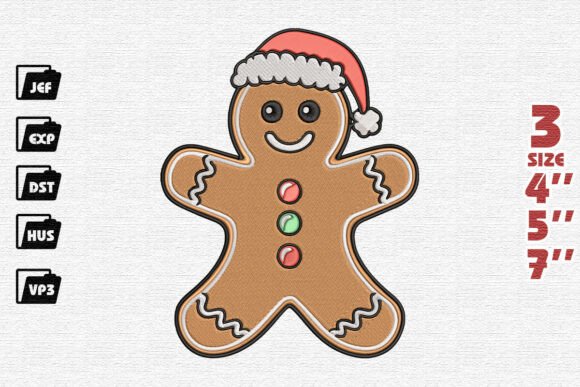
Review: Christmas Gingerbread Man in Santa Hat Design
As a designer who has spent countless hours digitizing and stitching out holiday motifs, I approach every new machine embroidery design with a mix of curiosity and caution. The market is flooded with seasonal graphics, but few strike the right balance between charm and technical stitchability. Recently, I evaluated the Christmas Gingerbread Man in Santa Hat Embroidery Design for a potential client project involving custom holiday merchandise. What follows is my practical assessment of how this design performs in real-world applications, from hoop selection to fabric choice.
First Impressions and Visual Appeal
The initial visual impact of this design is undeniably cheerful. It captures the classic essence of holiday nostalgia without relying on overly complex details that might get lost in translation during stitching. The gingerbread man features a friendly smile and shiny candy buttons in red and green, topped with a festive Santa hat. This composition creates an immediate emotional connection, which is crucial for any handmade product intended as a personalized gift.
From a layout perspective, the silhouette is clean and recognizable. For embroidery designers, this clarity is vital. A muddy or overly dense design can look amateurish when stitched out, especially on textured fabrics. This design maintains distinct separation between the gingerbread body, the hat, and the decorative elements, ensuring that each component remains visible even at smaller scales. The use of traditional holiday colors—warm browns, vibrant reds, and deep greens—provides excellent contrast, making it suitable for a wide range of thread colors and background materials.
Real-World Application Scenarios
To truly test the viability of an embroidery file, I consider where it will live in the finished product. I imagined this design applied to several common items sold by Etsy sellers and small shop owners.
- Sweatshirt Embroidery: Placed on the left chest of a heather grey crewneck, the design pops nicely. The fill stitches provide enough coverage to stand out against the fuzzy texture of fleece without sinking in.
- Tote Bag Design: On a canvas tote, the sturdy nature of the fabric supports the stitch density well. It makes for a charming holiday embroidery accent that customers appreciate for its durability and festive spirit.
- Baby Embroidery: For a baby onesie, the scale needs careful consideration. If the design is too large, it can stiffen the garment. However, if scaled down appropriately, it serves as an adorable focal point for a custom apparel line targeting young families.
- Embroidered Patch: This design translates exceptionally well to patches. The defined edges allow for clean cutting or merrowing, creating a professional-looking accessory that can be ironed or sewn onto jackets and bags.
For commercial embroidery projects, consistency is key. This design’s straightforward geometry means it is less likely to have registration issues across multiple runs, a significant advantage for bulk orders of boutique branding items or corporate holiday gifts.
Technical Considerations and Stitch Performance
While the aesthetic is strong, the technical execution determines whether a design is merely pretty or genuinely usable. Here are the critical factors I analyzed:
Stitch Density and Fabric Compatibility
The design appears to utilize a mix of satin stitch for outlines and text-like elements, and fill stitch for the body of the gingerbread man and the hat. This combination is standard for achieving depth and texture. However, satin stitches can be problematic on stretchy fabrics if not properly underlaid. When using this design on stretchy fabric like jersey knits, a cut-away stabilizer is non-negotiable to prevent puckering. On woven fabrics like cotton twill or linen, a tear-away stabilizer may suffice, but testing is always recommended.
Hoop Size and Scaling
One must verify the original hoop size compatibility before purchasing. While I cannot specify the exact dimensions without seeing the file metadata, designs of this nature typically fit within standard 4x4 or 5x7 hoops. If you plan to resize the design significantly, be wary of distorting the stitch angles. Shrinking it too much can cause the satin stitches to become too dense, leading to thread breaks or needle holes clustering together. Expanding it too much may reveal gaps in the fill areas. Always check the aspect ratio and maintain the original proportions unless you are experienced in editing digital embroidery file parameters.
Detail Clarity on Dark Fabrics
The red and green candy buttons are small details. On dark fabrics, such as navy or black sweatshirts, these colors hold up well. However, if you are stitching on a very dark brown or black fabric, ensure your thread choice for the gingerbread body provides enough contrast. A medium-brown thread might disappear. In such cases, consider using a lighter tan or adding a subtle backing stitch to enhance visibility. Testing the design in black and white mockups can help identify potential contrast issues before you thread the machine.
Practical Designer Notes for Best Results
Before committing to a full production run or listing this as a small shop product, follow these steps to ensure quality:
- Test on Scrap Fabric: Never skip the test stitch. Use the same fabric type and weight as your final product. This reveals any tension issues or registration errors.
- Check Thread Color Contrast: View your thread chart against the fabric. Ensure the red and green buttons do not blend into the background or the gingerbread body.
- Inspect Small Details: Zoom in on the digital preview. Are the eyes and mouth clearly defined? If they are single-run stitches, ensure they are thick enough to be visible after washing.
- Confirm Licensing: If you are an Etsy seller or run a craft business, verify the license terms. Most designers allow selling finished physical items but restrict the resale of the design assets themselves. Always read the specific terms provided with the download.
- Use Proper Stabilizer: Match the stabilizer to the fabric. Water-soluble topping can help prevent sink-in on plush towels or fleecy blankets, keeping the finished product looking crisp.
Final Verdict for Crafters and Sellers
The Christmas Gingerbread Man in Santa Hat Embroidery Design is a solid addition to any holiday collection. It offers a timeless appeal that resonates with buyers looking for traditional festive decor. Its strength lies in its simplicity and clear visual hierarchy, which makes it forgiving for beginners yet professional enough for seasoned apparel decorators.
For those creating printable mockups or digital previews, this design photographs well due to its bold shapes and vibrant color palette. It adds immediate value to custom apparel lines and helps build brand consistency through recognizable, high-quality imagery. Whether you are stitching a single personalized gift for a family member or producing a batch of tote bag design prototypes for a local craft fair, this design delivers reliable results.
Remember, the success of any embroidery project depends not just on the design file, but on the synergy between thread, fabric, stabilizer, and machine settings. Treat this design as a versatile tool in your creative toolkit, and it will serve your small business merchandise goals well throughout the holiday season and beyond.